Managing customer relationships has become far more complex than simply storing contact details. As businesses grow, they need systems that support unique workflows, automate repetitive tasks, and integrate seamlessly with existing software. This is where custom CRM software development provides a significant advantage. Instead of adapting your processes to fit a generic platform, a tailored CRM is designed around your operations, helping teams improve productivity, customer engagement, and long-term growth.
Whether you are looking to streamline sales, improve reporting, or centralise customer data, investing in custom CRM software can create a scalable solution that evolves with your business. In this guide, we'll explore the benefits, key features, costs, timelines, and development process involved in building a CRM tailored to your organisation.
What Is Custom CRM Software Development?
It is the process of designing and building a customer relationship management system specifically for an organisation's workflows, goals, and operational requirements. Unlike pre-built CRM platforms, a custom solution is developed from the ground up, allowing businesses to choose the exact features, integrations, and user experience they need.
How It Differs From Off-the-Shelf CRM Platforms
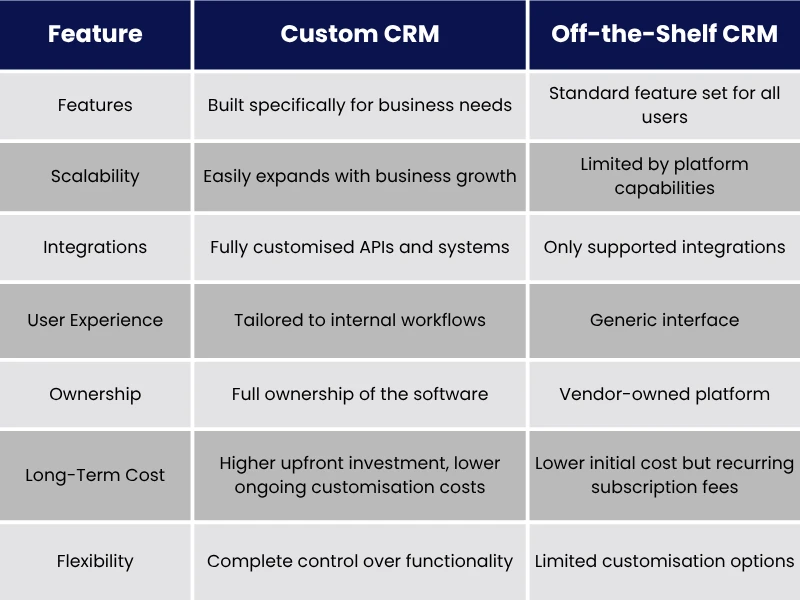
The flexibility of a tailored solution makes it particularly valuable for organisations with specialised workflows, regulatory requirements, or complex sales processes. It also eliminates many of the workarounds that reduce efficiency in standard CRM platforms.
Who Needs a Custom CRM Development Company
Not every organisation requires a tailored CRM. However, businesses experiencing rapid growth or operating in specialised industries often benefit from working with a custom CRM development company that understands their unique challenges.
A custom CRM is particularly valuable for organisations that:
- Have multiple departments sharing customer information.
- Manage complex sales pipelines with numerous approval stages.
- Require industry-specific workflows and compliance features.
- Need advanced automation beyond standard CRM capabilities.
- Want to integrate several internal systems into one central platform.
- Plan to scale operations without replacing their CRM in the future.
Large enterprises, healthcare providers, financial institutions, logistics companies, manufacturers, and technology firms frequently choose custom CRM software development because it provides long-term flexibility and competitive advantages that generic software cannot deliver.
Key Features of a Custom CRM Solution
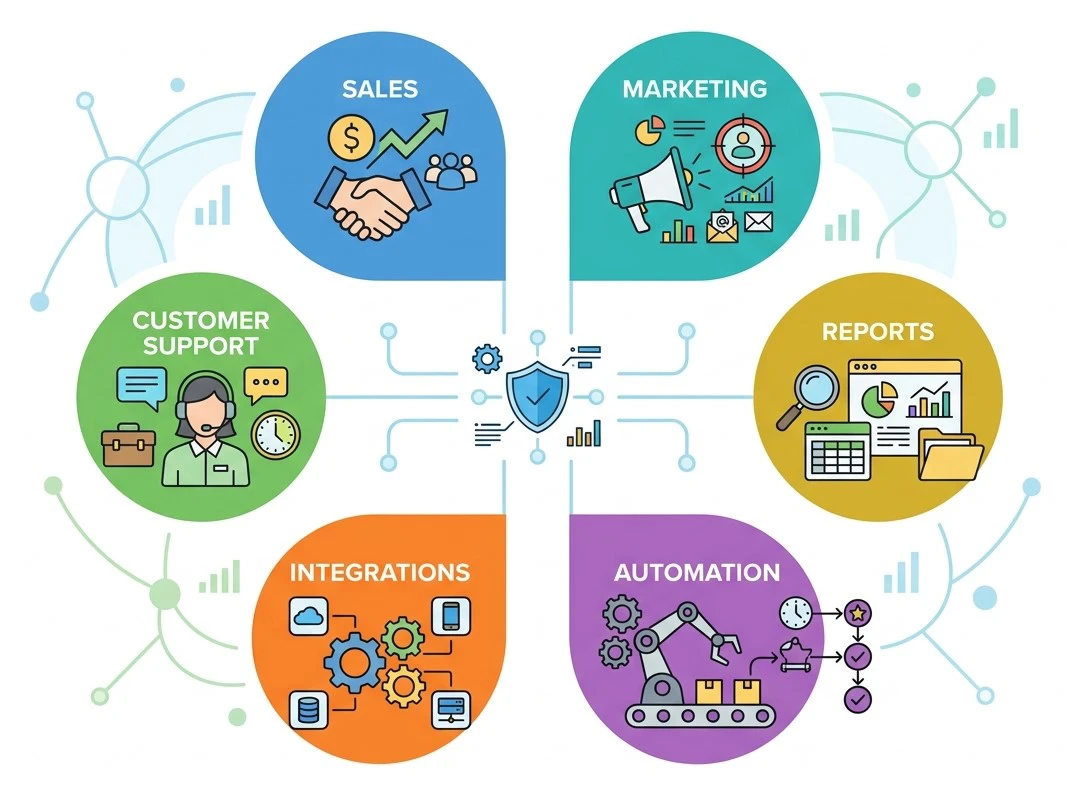
One of the greatest strengths of custom CRM software development is the ability to include only the features your teams actually need. Rather than overwhelming users with unnecessary functionality, a tailored CRM focuses on improving efficiency, collaboration, and customer experiences.
Sales Pipeline Software and Lead Management Tools
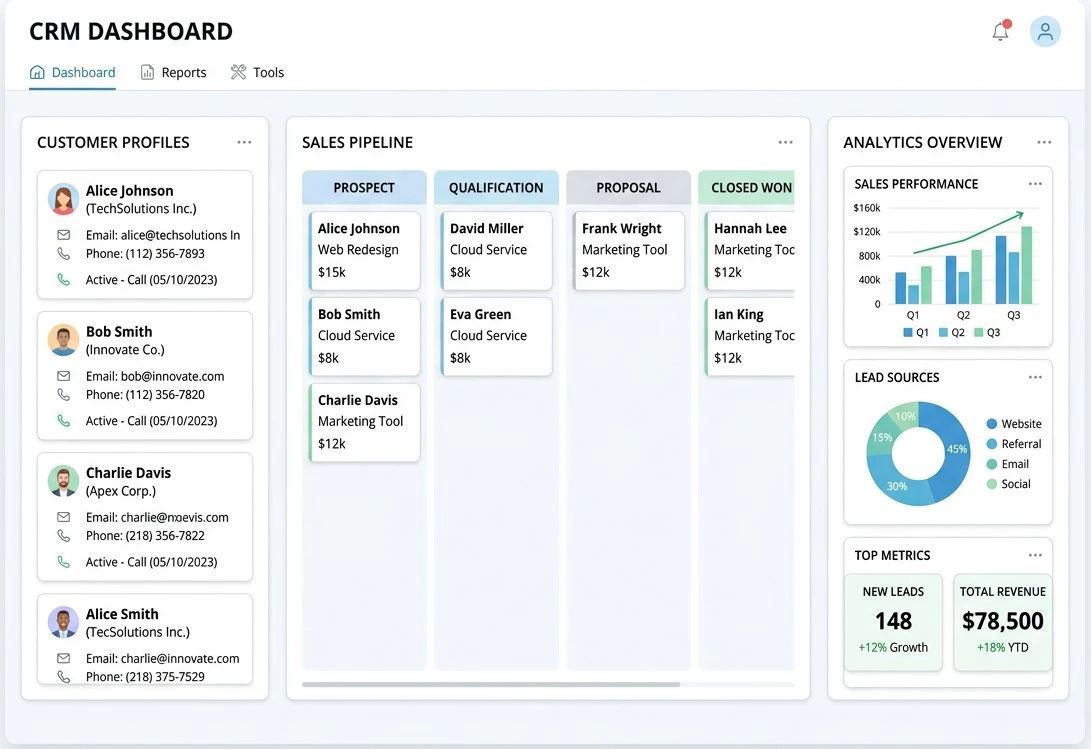
An effective CRM should simplify every stage of the sales journey, from capturing leads to closing deals. Integrated sales pipeline software gives sales teams complete visibility into opportunities while helping managers forecast revenue more accurately. Modern CRM systems often include a built-in lead management tool that automatically captures enquiries, assigns leads to the appropriate representatives, tracks follow-ups, and scores prospects based on predefined criteria. Automation reduces manual work while ensuring that no opportunity is overlooked. Additional capabilities may include:
- Visual sales pipelines
- Automated lead assignment
- Opportunity tracking
- Quote and proposal management
- Sales forecasting dashboards
- Workflow automation
- Task reminders and notifications
These features allow sales teams to spend less time on administrative work and more time building relationships with customers.
Customer Data Management and Reporting
Every interaction with a customer generates valuable information. A well-designed customer relationship management system consolidates contacts, communications, purchase history, support requests, contracts, and activity logs into a single source of truth. With centralised customer data, businesses gain deeper insights into customer behaviour and performance trends. Custom reporting dashboards provide real-time metrics that support informed decision-making across sales, marketing, customer service, and executive leadership.
Businesses can also create customised reports tailored to their KPIs rather than relying on fixed dashboards available in commercial CRM platforms.
Third-Party and API Integrations
Modern organisations rely on multiple business applications. A custom CRM becomes significantly more valuable when it connects seamlessly with the tools your teams already use. Depending on business requirements, integrations may include:
- ERP systems
- Accounting software
- Marketing automation platforms
- Customer support software
- Payment gateways
- Communication platforms
- Document management systems
- Email providers
- Business intelligence tools
Through secure APIs, data flows automatically between systems, eliminating duplicate data entry and reducing operational errors. This level of connectivity is one of the biggest reasons organisations invest in custom CRM software development, as it creates a unified digital ecosystem that supports long-term business growth.
Custom CRM Software Development Cost Breakdown
One of the first questions businesses ask is how much custom CRM software development will cost. The answer depends on the project's complexity, required features, integrations, security requirements, and the size of the development team. While a custom CRM requires a larger upfront investment than a subscription-based platform, it often delivers greater long-term value by eliminating unnecessary licensing fees and improving operational efficiency.
Cost by Project Size: Small Business to Enterprise
The overall CRM software development cost varies based on project scope and functionality. Typical industry ranges include:
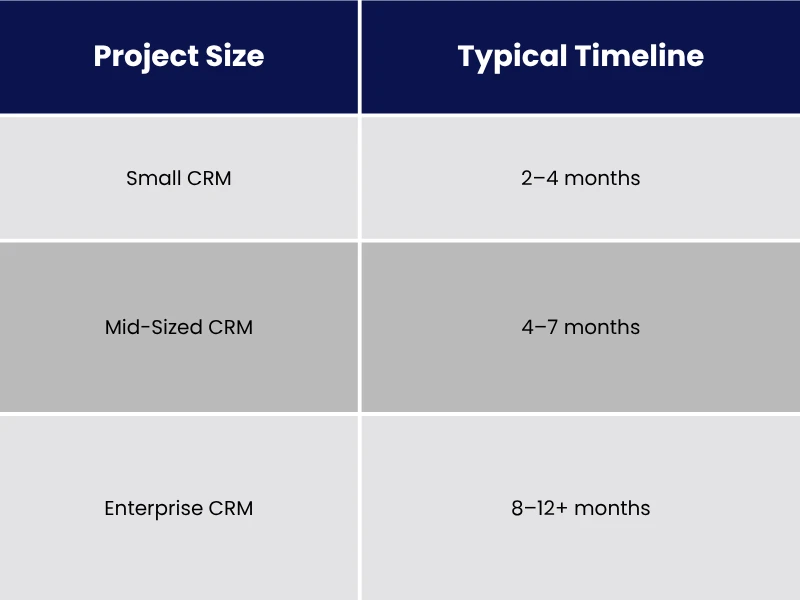
These figures can vary depending on the technology stack, development location, and the level of customisation required. Businesses with highly specialised workflows or strict compliance requirements should expect additional development effort.
Factors That Increase or Reduce Cost
Several factors influence the final investment in custom CRM software development, including:
- Number of users and user roles.
- Complexity of workflows and business logic.
- Custom dashboards and reporting requirements.
- Third-party integrations and API development.
- Mobile application support.
- Security, compliance, and access controls.
- Data migration from existing CRM platforms.
- Ongoing maintenance and future enhancements.
Clearly defining project requirements before development begins helps reduce unnecessary revisions and keeps the project within budget.
Custom CRM vs Off-the-Shelf CRM Pricing
Although subscription-based CRM platforms have lower entry costs, expenses often increase as businesses add users, premium features, and integrations. In contrast, custom CRM software development requires a higher initial investment but offers complete ownership and flexibility.
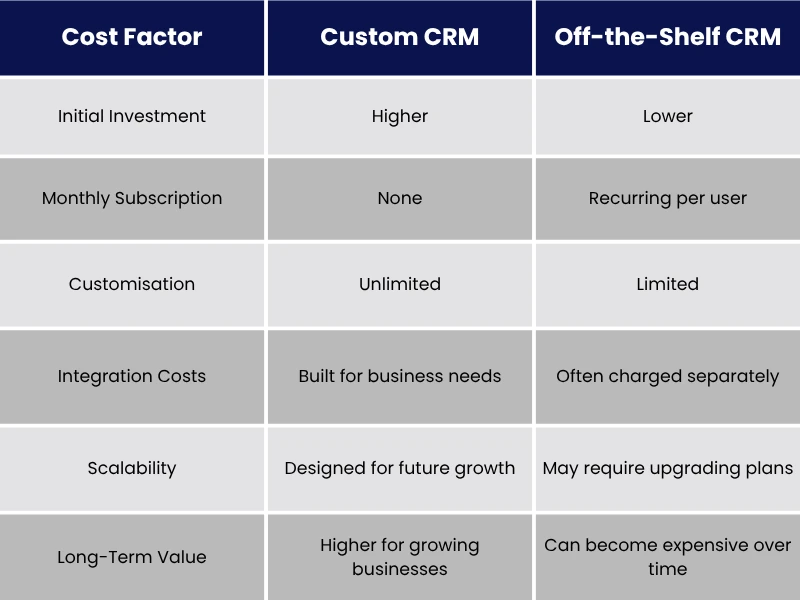
For organisations planning long-term expansion, a custom solution often provides a stronger return on investment than continually upgrading subscription plans.
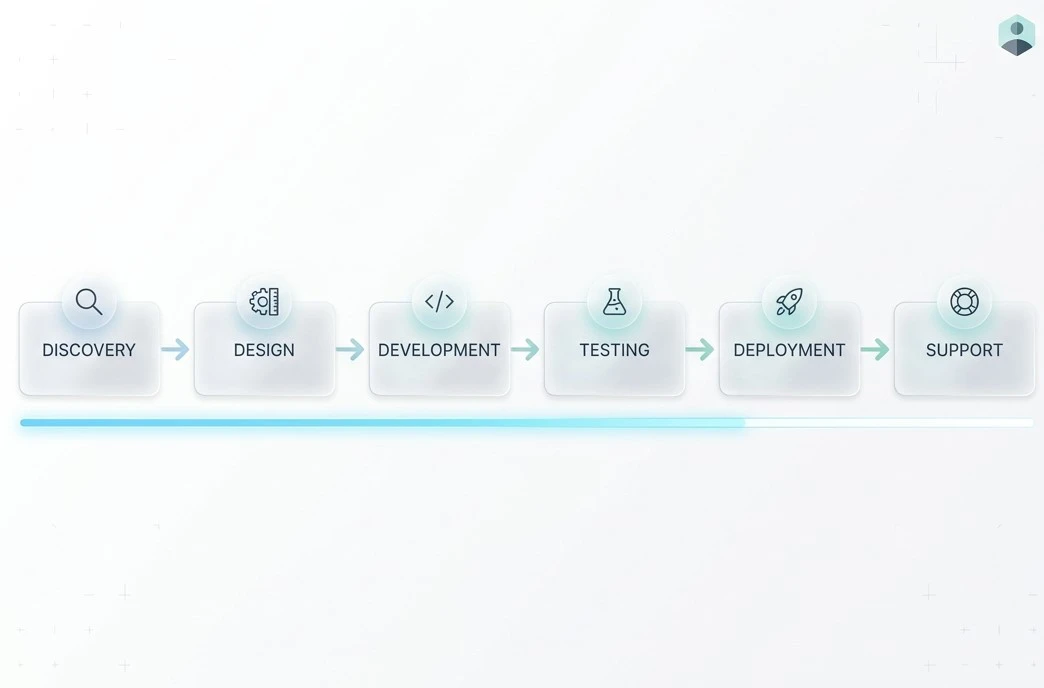
Development Timeline: From Discovery to Deployment
The timeline for custom CRM software development depends on the project's complexity and the number of features required. A simple CRM may take only a few months, while an enterprise-grade platform with extensive integrations can require significantly longer.
In general, businesses can expect:
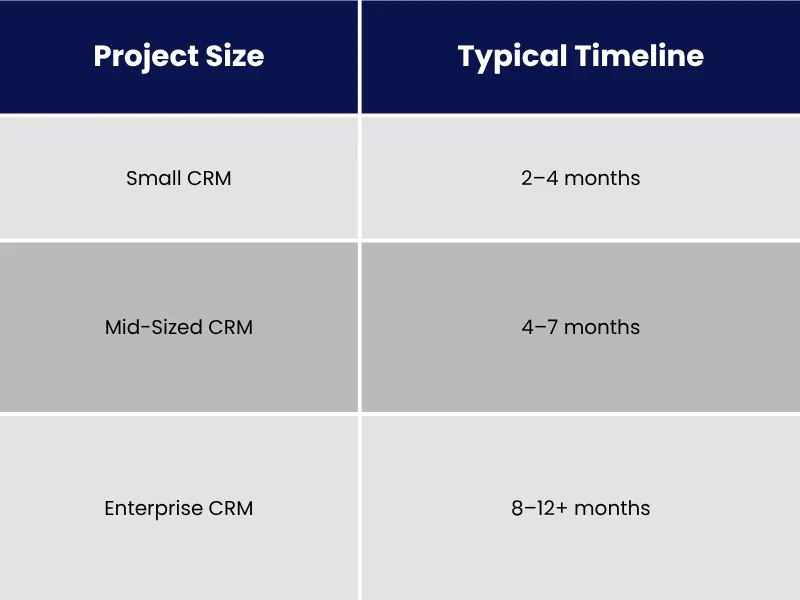
A structured development process ensures each stage is completed efficiently while reducing risks during implementation.
Discovery and Requirement Gathering
Every successful custom CRM software development project begins with understanding the business. During discovery, stakeholders define objectives, workflows, user roles, pain points, and technical requirements. This phase typically includes process mapping, feature prioritisation, technical planning, and identifying opportunities for automation. Investing time in discovery reduces costly changes later in the project.
Design and Prototyping
Once requirements are confirmed, designers create wireframes and interactive prototypes that demonstrate how users will navigate the CRM. This stage allows stakeholders to validate layouts, dashboards, and workflows before development begins. Early feedback helps ensure the final product aligns with user expectations while reducing redesign costs.
Development and Testing Phases
Developers build the CRM in iterative stages, implementing features, integrations, security controls, and automation based on approved requirements. Throughout development, quality assurance teams conduct functional, performance, security, and usability testing to identify issues before deployment. Regular testing ensures the CRM remains stable, secure, and reliable as new functionality is introduced.
Deployment and Post-Launch Support
After testing is complete, the CRM is deployed to the production environment, existing data is migrated, and users receive training to ensure a smooth transition. The project does not end after launch. Ongoing monitoring, performance optimisation, feature enhancements, and technical support help businesses maximise the value of custom CRM software development as their requirements evolve over time.
Step-by-Step Process for Building a Bespoke CRM Solution
Developing a CRM is more than writing code. It requires a structured approach that aligns technology with business objectives. The most successful bespoke CRM solutions for business are built through careful planning, continuous collaboration, and iterative development. A typical process includes:
- Define business goals and project requirements.
- Identify user roles and workflow requirements.
- Prioritise core features and integrations.
- Create wireframes and interactive prototypes.
- Develop the CRM using agile methodologies.
- Test functionality, security, and performance.
- Deploy the solution and migrate existing data.
- Monitor performance and continuously improve the platform.
Following a phased approach reduces project risks while ensuring the CRM delivers measurable business value.
Choosing the Right Custom CRM Development Company
Selecting the right technology partner has a direct impact on project success. Look for a development company with proven CRM experience, strong technical expertise, transparent communication, and a collaborative development process.
Before making a decision, review previous projects, discuss scalability requirements, ask about security practices, and ensure they provide post-launch maintenance and support. A reliable partner should focus on understanding your business goals rather than simply delivering software.
Common Mistakes to Avoid
Many CRM projects exceed budgets or fail to meet expectations because of avoidable mistakes. Common pitfalls include:
- Starting development without clearly defined requirements.
- Trying to build every feature in the first release.
- Ignoring user feedback during design.
- Underestimating data migration complexity.
- Overlooking employee training and change management.
- Failing to plan for future scalability.
- Neglecting ongoing maintenance after launch.
Avoiding these issues helps ensure your CRM remains valuable for years to come.
Building a CRM That Grows with Your Business
A CRM should support the way your business operates, not force your team to adapt to generic software limitations. While off-the-shelf platforms offer convenience, they often struggle to keep pace with growing businesses that require specialised workflows, advanced integrations, and greater flexibility.
Investing in custom CRM software development provides complete control over features, scalability, and user experience. Although the initial investment is higher, the long-term benefits often outweigh the costs through improved efficiency, better customer insights, and streamlined operations. Whether you're replacing an outdated CRM or building one from scratch, partnering with an experienced development team ensures your solution is designed for sustainable growth and long-term success.
Contact Phentech today to discuss your requirements and discover how a custom CRM can help your organisation improve productivity, strengthen customer relationships, and scale with confidence.