Launching a SaaS product is exciting, but building every feature before testing the market is one of the most common reasons startups waste time and budget. SaaS MVP development allows founders to launch faster, validate demand with real users, and make informed product decisions before committing to full-scale development.
Instead of spending months creating a feature-rich platform based on assumptions, startups can release a streamlined product that solves one core problem exceptionally well. Early customer feedback helps refine the product roadmap, improve user experience, and reduce the risk of building functionality that delivers little value. Whether you're preparing for your first launch or expanding an existing business into SaaS, understanding the right MVP strategy can save both time and money.
What Is SaaS MVP Development?
A SaaS MVP (Minimum Viable Product) is the simplest version of a cloud-based software product that includes only the essential features needed to validate a business idea with real users. SaaS MVP development is the process of designing, building, and launching that minimum viable product so startups can test market demand, collect feedback, and improve the product before investing in a complete solution.
Unlike a fully developed application, an MVP focuses on solving one specific customer problem. The objective is not to impress users with dozens of features but to learn whether the core idea resonates with the target audience. This evidence-based approach helps startups make better product decisions while keeping development costs under control.
MVP vs Full Product: Key Differences
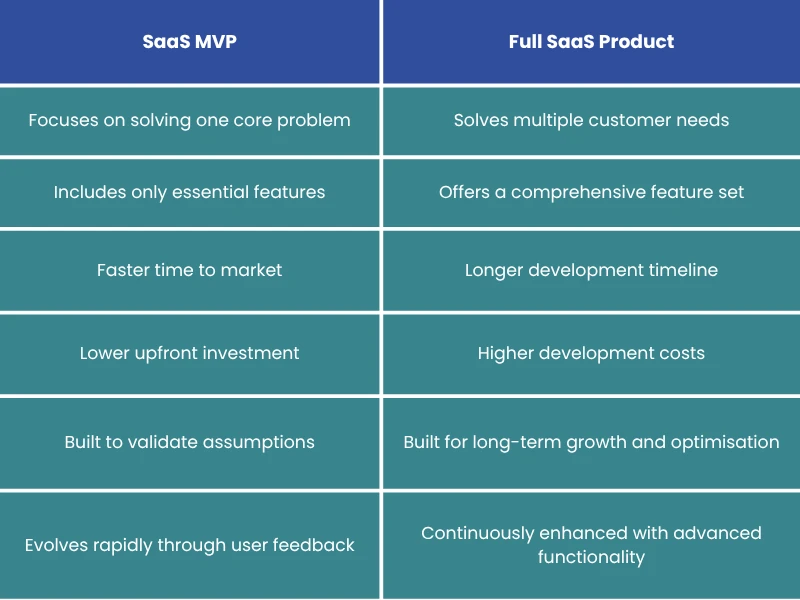
The key difference lies in purpose. An MVP is designed to test whether a product deserves further investment, while a full SaaS platform is built to scale, compete, and serve a larger customer base over the long term.
Why Startups Should Start With an MVP
Every startup begins with assumptions about customer needs, pricing, and product functionality. The challenge is that assumptions are rarely perfect. SaaS MVP development gives founders an opportunity to replace guesswork with real-world insights before making significant financial commitments. Launching an MVP allows businesses to enter the market much sooner, giving them access to valuable customer feedback that can shape future development. Instead of spending months building advanced functionality, startups can identify which features users genuinely value and which ones add unnecessary complexity.
An MVP also strengthens conversations with investors and stakeholders. Demonstrating active users, customer engagement, and validated demand often carries far more weight than presenting a product roadmap filled with untested ideas. By learning from actual user behaviour, startups can reduce risk, prioritise future investments, and build products with greater confidence.
How to Build a SaaS MVP for Your Startup
Building a successful MVP requires more than reducing features. SaaS MVP development should follow a structured process that validates the business idea, prioritises customer needs, and creates a foundation for future growth.
Validating Your Idea Before Development
Before development begins, validate the problem by speaking with potential customers and understanding their pain points. Support these insights with market testing through landing pages, early-access waitlists, competitor analysis, and simple prototypes to confirm genuine demand. If your product will include AI-powered features, this is also the ideal stage to explore how artificial intelligence can enhance your solution. Learn more in Phentech's AI in Business blog.
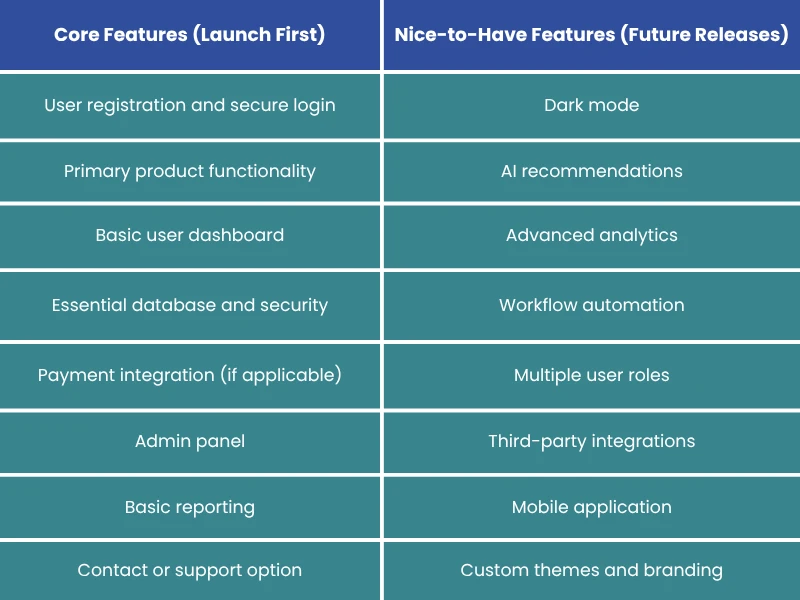
Defining Core Features vs Nice-to-Haves
A successful MVP includes only the features needed to validate the core business hypothesis. Anything that doesn't directly contribute to proving your product's value can usually be postponed to future releases. Ask one simple question before adding a feature: Would users still understand and benefit from the product without it? If the answer is yes, it likely belongs on the future roadmap rather than in the initial MVP.
SaaS MVP Feature Checklist
Choosing a Scalable SaaS Architecture From Day One
Although an MVP is intentionally lean, the technology behind it should support future expansion. Building on a scalable SaaS architecture allows startups to introduce new features, onboard more customers, and improve performance without rebuilding the product from scratch. Decisions made during the early stages often determine how easily the platform can grow over the next several years.
Choosing cloud-native infrastructure, modular application design, secure authentication, and API-ready integrations creates a flexible foundation that supports continuous improvement. While founders should avoid overengineering an MVP, investing in a well-planned architecture prevents technical debt and makes future scaling significantly easier as the product gains traction.
SaaS MVP Development Cost
The SaaS MVP development cost depends on factors such as product complexity, feature requirements, technology stack, integrations, and the development team's expertise. While every project is different, understanding these factors helps startups plan a realistic budget and avoid unnecessary expenses. A well-planned SaaS MVP development project focuses on validating the business idea efficiently, reducing the risk of costly rework and supporting future scalability.
What Drives the Cost Up or Down
Several factors influence the overall cost of SaaS MVP development. Feature complexity has the greatest impact, with advanced functionality requiring more development time than a basic MVP. Technology choices, third-party integrations, security requirements, and UI/UX design also affect pricing. In addition, experienced development teams may have higher upfront rates but often deliver better quality, fewer issues, and faster project completion, making them a worthwhile long-term investment.
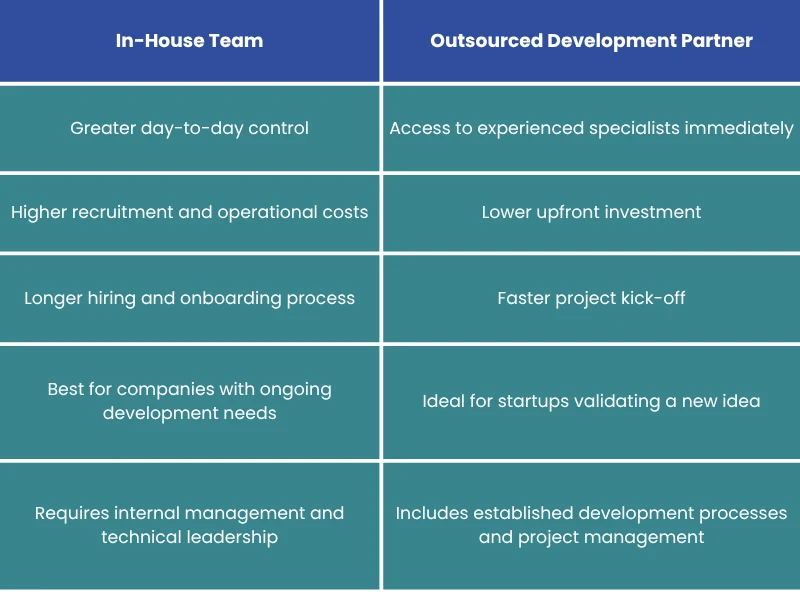
In-House vs Outsourced MVP Development Services
Choosing between an internal development team and MVP development services is an important strategic decision for startups.
Typical Budget Ranges by Complexity
Although costs vary depending on project requirements and location, the following estimates provide a realistic starting point for planning.
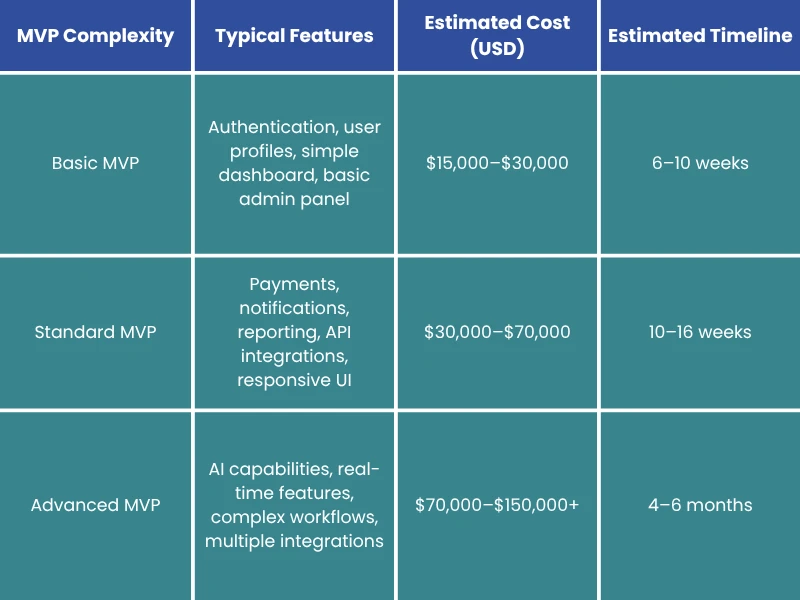
These ranges provide a useful benchmark, but every startup has unique requirements. A discovery phase is the best way to estimate scope accurately before development begins.
Agile MVP Development Process
Building an MVP is not a one-time project but a continuous learning process. Successful founders launch quickly, collect user insights, and improve the product through short development cycles rather than waiting for a perfect first release. This approach makes agile MVP development particularly effective for SaaS startups because it reduces risk while keeping development aligned with real customer needs.
Sprint-Based Development Cycles
Instead of building every feature at once, agile teams divide development into short sprints, typically lasting one or two weeks. Each sprint focuses on delivering a small, functional improvement that can be reviewed, tested, and refined before moving to the next phase. This incremental approach gives founders regular visibility into progress and allows priorities to change as new information becomes available. If customer feedback suggests a different direction, adjustments can be made without disrupting the entire project.
User Validation Testing and Feedback Loops
Launching an MVP is only the beginning. The most valuable insights come from observing how real users interact with the product. Effective user validation testing helps startups identify usability issues, discover missing functionality, and understand which features deliver the greatest value. Feedback can be gathered through onboarding surveys, usability sessions, product analytics, customer interviews, support requests, and in-app feedback forms. Rather than relying on assumptions, these insights allow teams to make improvements based on measurable user behaviour.
Iterating Based on Real User Data
Every release should answer new questions about customer behaviour. Analytics reveal where users spend the most time, which features they ignore, and where they encounter friction during onboarding or daily use.
Founders should use these insights to prioritise future development instead of expanding the product based solely on internal opinions. Continuous iteration enables SaaS MVP development to evolve into a product that closely matches market demand while avoiding unnecessary complexity. Over time, this disciplined approach creates a stronger, more scalable platform with features that customers genuinely value.
Common Mistakes Startups Make With SaaS MVPs
Even with a promising idea, many startups struggle because they lose sight of what an MVP is meant to achieve. The goal is to validate a business hypothesis, not to launch a perfect product. Avoiding the following mistakes can save months of development time and prevent unnecessary costs.
- Building Too Many Features: Trying to include everything delays SaaS MVP development and makes it harder to validate your core idea.
- Skipping Market Validation: Failing to test demand through interviews, landing pages, or waitlists increases the risk of building the wrong product.
- Ignoring Scalability: Neglecting a scalable foundation can create technical debt and expensive redevelopment later.
- Overlooking User Feedback: Without user validation testing, startups miss valuable insights that should guide future improvements.
- Iterating Too Slowly: Delayed updates based on real user data can reduce customer engagement and slow product growth.
From MVP to Scalable Product: What Comes Next
Once your MVP has validated the market, the next step is transforming it into a mature SaaS product. Rather than adding features indiscriminately, prioritise improvements that align with customer feedback, business objectives, and long-term growth.
- Introduce advanced features based on user demand rather than assumptions.
- Strengthen security, performance, and platform reliability as your user base grows.
- Expand integrations with third-party tools to improve functionality.
- Use product analytics to optimise user journeys and increase customer retention.
- Invest in scalable infrastructure, automated testing, and efficient development processes.
- Continue iterating based on insights gained during SaaS MVP development to support sustainable growth.
Launch Smart, Scale with Confidence
For startups, success isn't about building the biggest product first. It's about building the right product first. SaaS MVP development enables founders to validate ideas, reduce development risk, and make informed decisions using real customer feedback instead of assumptions. By starting with a focused feature set, following an agile development process, and iterating based on user insights, startups can reach the market faster while creating a strong foundation for future growth. Whether you're developing your first SaaS platform or refining an existing concept, an MVP is often the fastest path from idea to scalable product. At Phentech, we help startups transform concepts into scalable digital products through strategic planning, user-focused design, and expert development.
Contact Phentech today to discuss your project and build your SaaS product with confidence.
Frequently Asked Questions
How long does it take to build a SaaS MVP?
Most MVPs can be developed within 6 to 16 weeks, depending on the scope and complexity. Products with advanced integrations, AI capabilities, or highly customised workflows may require four to six months. Agile development helps deliver usable features throughout the project instead of waiting until the end.
What features should a SaaS MVP include?
An MVP should include only the features necessary to test the product's core value proposition. Essential functionality such as user authentication, the primary workflow, basic administration, and customer support tools should take priority. Additional features can be introduced after user feedback validates demand.
How do you validate a SaaS MVP idea?
The most effective validation methods include conducting customer interviews, creating landing pages to measure interest, launching early-access waitlists, testing clickable prototypes, and collecting feedback from beta users. Combining these approaches provides evidence that customers genuinely need the solution before significant development begins.