Offshore software development services allow businesses to build software with highly skilled global teams while reducing development costs and accelerating delivery. By selecting the right engagement model, understanding pricing structures, and partnering with an experienced provider, organisations can scale efficiently without compromising quality, security, or project outcomes.
Businesses today face increasing pressure to innovate faster while keeping development costs under control. At the same time, finding experienced software engineers locally has become more challenging due to talent shortages, rising salaries, and growing competition across industries. This is why offshore software development services have become a strategic choice for organisations of all sizes.
What Are Offshore Software Development Services?
Offshore software development services involve partnering with a software development team located in another country to design, build, maintain, or scale digital products. Instead of recruiting and managing an entirely local engineering team, businesses collaborate with external specialists who possess the required technical expertise. Unlike traditional software development outsourcing, offshore partnerships often become long-term extensions of internal teams. Developers work closely with stakeholders, participate in planning sessions, and contribute throughout the software lifecycle while following the client's preferred workflows and quality standards.
Businesses often compare offshore development with local or regional alternatives before deciding which model best suits their goals.
Offshore vs Onshore vs Nearshore Development
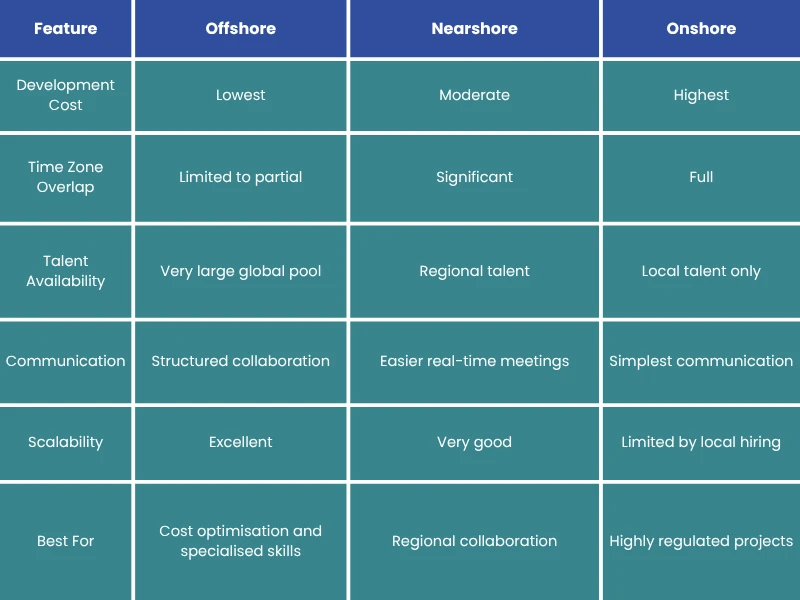
When evaluating offshore vs onshore development, businesses should consider far more than hourly rates. Project complexity, communication expectations, compliance requirements, and long-term scalability all play an important role in determining the right approach.
Why Businesses Choose Offshore Software Development Services
The growing popularity of offshore software development services is driven by much more than lower operating costs. Modern organisations increasingly rely on global development teams to improve agility, access specialised expertise, and accelerate innovation.
Significant Cost Savings:
Reduce recruitment, infrastructure, and operational expenses while maintaining access to experienced software engineers.
Access to Global Talent: Partner with an experienced offshore development company to access skilled developers across a wide range of technologies and industries.
Faster Product Development:
Accelerate project delivery by onboarding experienced development teams without lengthy local hiring processes.
Flexible Team Scaling:
Scale your team up or down quickly through staff augmentation as project requirements evolve.
Focus on Strategic Priorities:
Allow your internal teams to focus on business growth and innovation while offshore experts handle technical execution, delivering the key offshore software development benefits businesses seek.
Offshore Software Development Engagement Models
Selecting the right engagement model is just as important as choosing the right development partner. The model you choose affects project flexibility, costs, communication, and overall delivery success. Most offshore software development services providers offer several collaboration options depending on your business objectives.
Dedicated Development Team
A dedicated team functions as an extension of your in-house engineering department. Developers, designers, QA engineers, and project managers work exclusively on your product, making this model ideal for long-term software development and digital transformation initiatives. This approach provides maximum flexibility, complete control over priorities, and strong collaboration throughout the project lifecycle.
Staff Augmentation
When your existing team requires additional expertise, you can hire offshore developers to fill skill gaps without expanding your permanent workforce. Whether you need cloud engineers, AI specialists, or mobile developers, this model allows you to scale resources quickly while maintaining internal project management. It is particularly effective for organisations experiencing temporary increases in workload or requiring specialised technical knowledge.
Fixed Price Model
Projects with clearly defined requirements and limited scope often benefit from a fixed-price agreement. The development cost and timeline are agreed upon before work begins, providing predictable budgeting and reduced financial uncertainty. This model works well for MVPs, proof-of-concepts, and smaller applications where project requirements are unlikely to change significantly.
Time and Material Model
When project requirements continue to evolve, the Time and Material model offers greater flexibility. Businesses pay for the actual hours worked and resources utilised, making it suitable for agile development, continuous product improvement, and long-term innovation projects. This approach enables teams to respond quickly to changing business priorities without renegotiating the entire contract.
Build-Operate-Transfer (BOT)
Large enterprises sometimes choose the Build-Operate-Transfer model to establish an offshore development centre. The technology partner recruits the team, manages operations, and builds delivery processes before transferring ownership to the client at a later stage. BOT is particularly valuable for organisations planning a long-term international engineering presence.
Offshore Software Development Pricing
One of the primary reasons organisations invest in offshore software development services is the opportunity to optimise development costs while maintaining high engineering standards. However, pricing varies considerably depending on location, expertise, technology stack, and project complexity.
Factors That Influence Development Costs
Several variables determine the final project budget:
- Developer experience and seniority
- Programming languages and technology stack
- Project complexity and scope
- Team size
- Delivery timeline
- Industry compliance requirements
- Quality assurance and testing
- DevOps, cloud infrastructure, and maintenance
Although hourly rates provide a useful benchmark, businesses should evaluate the total value delivered rather than selecting the lowest-cost provider.
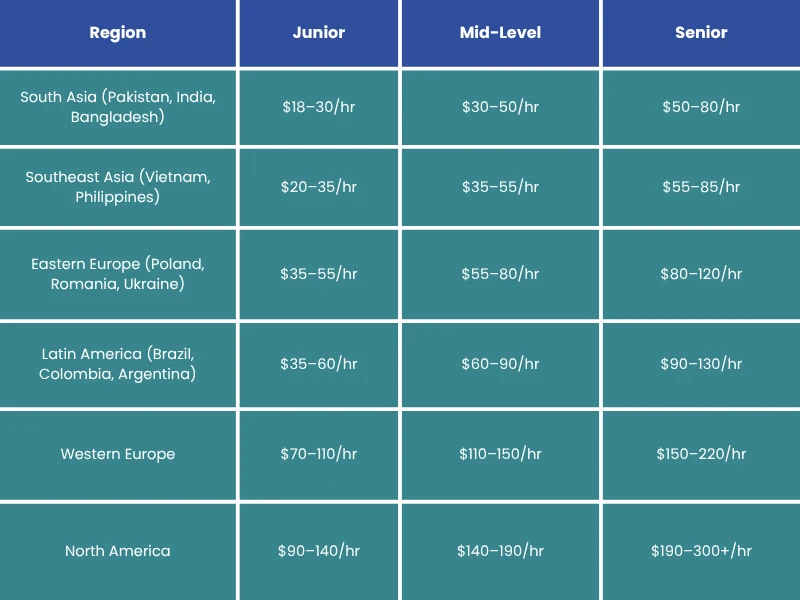
Average Offshore Developer Hourly Rates (2026)
The figures below reflect commonly quoted market ranges across established software outsourcing destinations in 2026. Actual pricing varies by technology, seniority, and project requirements.
Hidden Costs to Consider
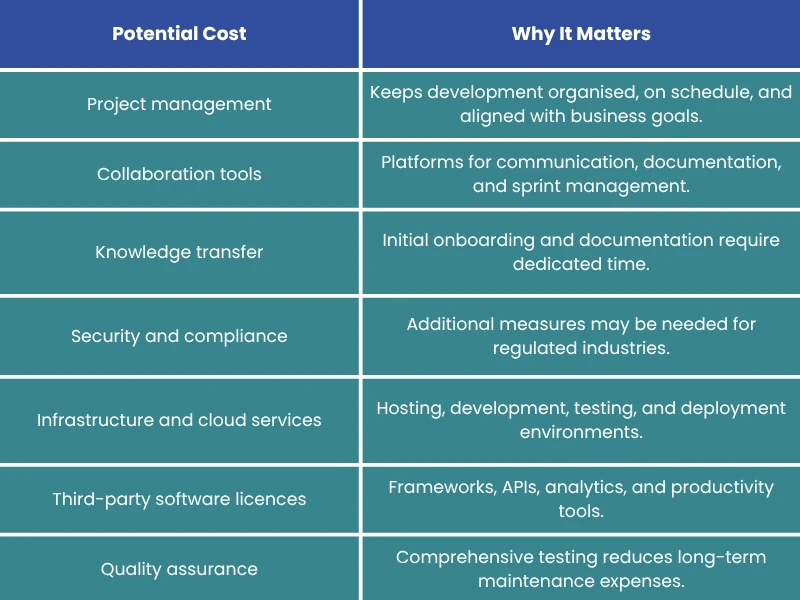
Looking only at hourly rates can lead to inaccurate budgeting. Successful offshore projects require planning for several additional operational costs.
How to Choose the Right Offshore Software Development Partner
Choosing the right partner involves evaluating expertise, communication, security, and delivery capabilities rather than focusing solely on cost.
- Review Technical Expertise: Assess experience, industry knowledge, certifications, and successful projects using your required technologies.
- Evaluate Communication Practices: Look for transparent reporting, regular updates, and effective collaboration despite any time zone difference.
- Assess Security Standards: Ensure the provider follows secure development practices, NDAs, and relevant compliance requirements.
- Review Portfolio and Client Feedback: Check case studies, testimonials, and long-term client relationships to verify proven results.
- Understand Their Development Process: Choose a partner that follows Agile, CI/CD, code reviews, and continuous testing for reliable delivery.
- Compare Collaboration Models: When evaluating nearshore vs offshore, consider communication, cultural fit, and working-hour overlap alongside technical expertise.
Best Practices for Successful Offshore Software Development
Following proven best practices helps maximise the value of offshore software development services while ensuring smoother collaboration and successful project delivery.
- Define Clear Goals: Establish detailed project requirements, timelines, and success metrics before development begins.
- Choose the Right Engagement Model: Select a collaboration model that aligns with your project scope, budget, and flexibility needs.
- Maintain Regular Communication: Schedule consistent meetings and progress updates to keep all stakeholders aligned.
- Use Agile Methodologies: Deliver software in iterative sprints to accommodate feedback and changing requirements.
- Prioritise Security: Protect your data through secure coding practices, NDAs, and compliance with industry standards.
- Document Everything: Maintain comprehensive documentation to simplify onboarding, maintenance, and future enhancements.
- Build a Long-Term Partnership: Treat your offshore team as an extension of your organisation to encourage collaboration and continuous improvement.
Common Challenges and How to Overcome Them
While offshore development offers significant advantages, addressing common challenges proactively helps ensure project success.
- Communication Gaps: Use regular meetings, shared documentation, and collaboration tools to maintain transparency.
- Time Zone Differences: Schedule overlapping working hours and leverage asynchronous communication for continuous progress.
- Cultural Differences: Foster open communication and establish shared expectations to strengthen team collaboration.
- Scope Creep: Control changing requirements through Agile planning and a structured change management process.
- Quality Assurance: Implement continuous testing, code reviews, and automated QA throughout development.
- Security Risks: Enforce robust security measures, access controls, and compliance standards to protect sensitive data.
- Knowledge Transfer: Create detailed documentation and conduct regular knowledge-sharing sessions to ensure project continuity.
Why Choose Phentech for Offshore Software Development Services?
Choosing the right technology partner is just as important as selecting the right engagement model. At Phentech, we combine technical excellence with transparent collaboration to help businesses confidently deliver successful software projects. Our experienced engineers work across modern technologies, including web applications, mobile development, cloud platforms, AI solutions, enterprise software, and custom digital products. Whether you need a dedicated development team or additional engineering support, our flexible engagement models adapt to your business objectives.
Every project is backed by Agile delivery, robust quality assurance, secure development practices, and proactive communication, ensuring complete visibility throughout the software development lifecycle. By partnering with Phentech for offshore software development services, you gain a reliable technology partner focused on delivering scalable, future-ready solutions that support long-term business growth.
Frequently Asked Questions
Is offshore software development cheaper than hiring locally?
In many cases, yes. Businesses can significantly reduce recruitment, infrastructure, and labour costs while maintaining access to highly skilled engineering talent. However, the best value comes from selecting a quality-focused partner rather than simply the lowest hourly rate.
How do I choose the right engagement model?
The ideal model depends on your project scope, flexibility requirements, budget, and timeline. Dedicated teams suit long-term initiatives, while fixed-price projects work well for clearly defined requirements. Time and Material models provide greater flexibility for evolving products.
Is offshore software development secure?
Yes. Reputable providers implement secure development practices, confidentiality agreements, access controls, code reviews, and compliance with relevant industry standards to protect client data and intellectual property.
Can offshore teams work with my in-house developers?
Absolutely. Offshore teams frequently collaborate alongside internal engineers, product managers, designers, and stakeholders, providing additional expertise while integrating seamlessly into existing workflows.
Is offshore software development right for my business?
Yes, offshore software development services are ideal for startups, growing businesses, and enterprises that need skilled developers, flexible scaling, faster delivery, and cost-efficient software development. They are particularly valuable for organisations building digital products or accelerating digital transformation.
Build Smarter with the Right Offshore Partner
The demand for offshore software development services continues to grow because businesses need scalable, cost-effective, and highly skilled engineering teams capable of delivering modern digital solutions. Beyond reducing development costs, offshore partnerships provide access to global talent, faster delivery cycles, greater flexibility, and the ability to scale projects with confidence. Partner with Phentech to access experienced global engineering talent, flexible engagement models, and reliable delivery.
Contact our team today to discuss your project and discover how our offshore software development services can help you build faster, scale smarter, and achieve your business goals.