Modern online retail is more competitive than ever. Customers expect personalized shopping experiences, instant support, accurate product suggestions, and fast delivery. Businesses that fail to meet these expectations often struggle with declining conversions and customer loyalty. This is where e-commerce machine learning use cases are making a measurable impact.
By analysing large volumes of customer and operational data, machine learning enables online retailers to make smarter decisions, automate repetitive tasks, and deliver highly personalised experiences. Whether you're a growing online store or a global marketplace, adopting intelligent automation can help improve customer satisfaction while increasing revenue.
What Are E-commerce Machine Learning Use Cases?
It refers to the practical ways businesses apply machine learning algorithms to improve online shopping experiences and business performance. Instead of relying on static rules, machine learning continuously learns from customer behaviour, purchase history, browsing patterns, and operational data to make increasingly accurate predictions. Today, machine learning in e-commerce powers everything from personalised shopping experiences to inventory planning and automated customer engagement. The result is a more efficient business that responds quickly to changing customer expectations.
Why Machine Learning Matters in Modern E-commerce
Traditional analytics explain what happened. Machine learning helps predict what is likely to happen next. This shift allows retailers to become proactive rather than reactive. Some of the biggest advantages include:
- Personalised customer experiences
- Faster operational decisions
- Improved inventory planning
- Higher conversion rates
- Better customer retention
- Reduced operational costs
As competition continues to grow, businesses using AI in e-commerce gain a significant advantage by delivering faster, smarter, and more relevant shopping experiences.
How Machine Learning Works in E-commerce
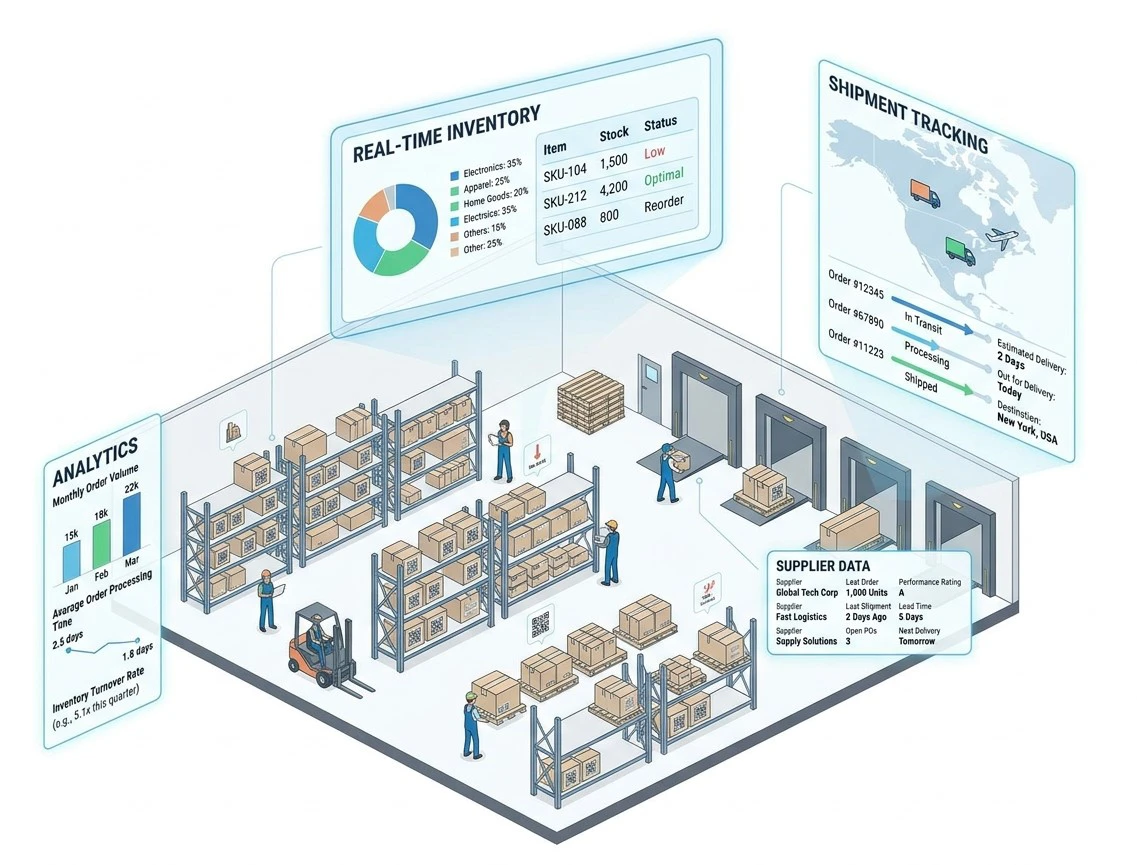
Machine learning starts by collecting data from multiple touchpoints, including website visits, search behaviour, purchase history, abandoned carts, reviews, and customer interactions. Algorithms analyse these patterns to identify trends that humans would struggle to detect manually. As more data becomes available, the models continuously improve their predictions.
This enables businesses to personalise recommendations, forecast demand, automate pricing decisions, and improve customer engagement in real time.
Top E-commerce Machine Learning Use Cases That Drive Growth
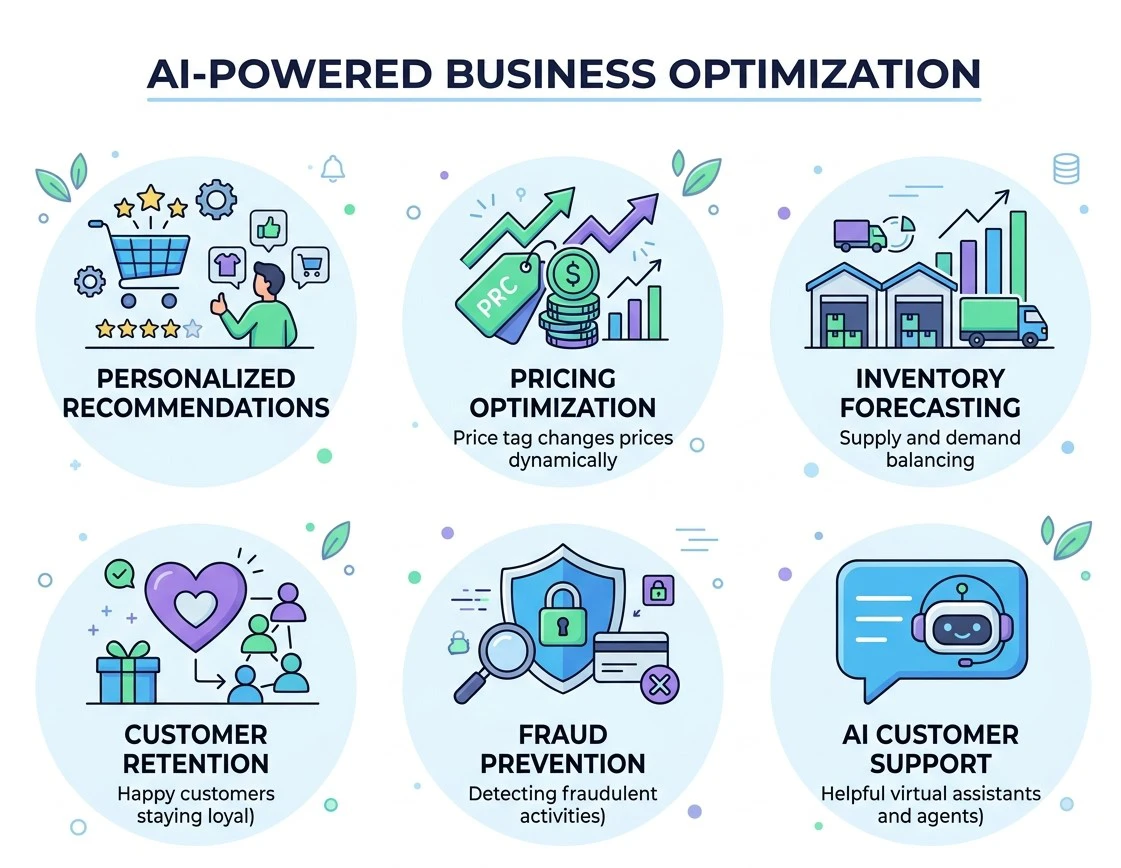
Personalised Product Recommendations
One of the most valuable e-commerce machine learning use cases is delivering personalised recommendations based on customer behaviour. Rather than showing every visitor the same products, retailers use a sophisticated e-commerce recommendation system to recommend items based on browsing history, previous purchases, similar customer behaviour, and current shopping intent. An intelligent product recommendation engine helps increase average order value by encouraging cross-selling and upselling while making shopping more relevant for every customer.
Intelligent Product Search
Customers expect to find products quickly. Machine learning improves search by understanding user intent instead of simply matching keywords.Modern search systems can interpret spelling mistakes, recognise natural language queries, and even support visual search where customers upload an image to find similar products. This creates a faster shopping journey and reduces search abandonment.
Dynamic Pricing Optimisation
Pricing directly influences conversions and profitability. Another powerful example of e-commerce machine learning use cases is using dynamic pricing to adjust prices automatically based on market demand, competitor pricing, inventory levels, and seasonal trends. Instead of manually updating prices, retailers can optimize profitability while remaining competitive throughout the year.
Customer Segmentation
Not every customer behaves the same way. Machine learning automatically creates meaningful groups using purchasing habits, browsing behaviour, demographics, and engagement levels. Accurate customer segmentation enables businesses to deliver personalised marketing campaigns, targeted promotions, and relevant product recommendations that improve both conversion rates and customer loyalty.
Predictive Customer Churn Analysis
Retaining customers is often more cost-effective than acquiring new ones. Machine learning identifies customers who are likely to stop purchasing by analysing behavioural signals such as declining engagement, fewer purchases, or longer buying intervals. Businesses can then launch personalised offers, loyalty rewards, or targeted campaigns before valuable customers leave.
Inventory Planning and Demand Prediction
Inventory mistakes can significantly reduce profitability. Retailers increasingly rely on demand forecasting models to predict future sales using historical purchasing patterns, seasonal demand, promotional activities, and external factors. Accurate forecasting helps reduce stock shortages while avoiding excess inventory that ties up working capital.
Fraud Detection and Payment Security
Online retailers process thousands of transactions every day, making security a major concern. Machine learning improves fraud detection by identifying unusual purchasing behaviour, suspicious payment activity, and abnormal login patterns in real time. Suspicious transactions can be flagged instantly, helping businesses reduce chargebacks while protecting customers.
AI-Powered Customer Support
Customer expectations have changed dramatically. Shoppers want immediate answers regardless of the time of day. Intelligent chatbots provide instant responses to common questions, assist with order tracking, recommend products, and resolve simple support requests without requiring human intervention. This improves customer satisfaction while reducing support costs.
Marketing Campaign Optimisation
Marketing teams generate vast amounts of customer data, but identifying the right audience is often challenging. Machine learning uses predictive analytics to identify which customers are most likely to engage with specific campaigns, purchase certain products, or respond to promotions. This improves campaign performance while reducing wasted advertising spend.
Review and Sentiment Analysis
Customer reviews contain valuable insights into product quality, service, and customer expectations. Machine learning analyses review sentiment to identify recurring complaints, emerging product issues, and customer preferences. Businesses can then improve products, optimize customer service, and strengthen their overall shopping experience.
Benefits of E-commerce Machine Learning Use Cases
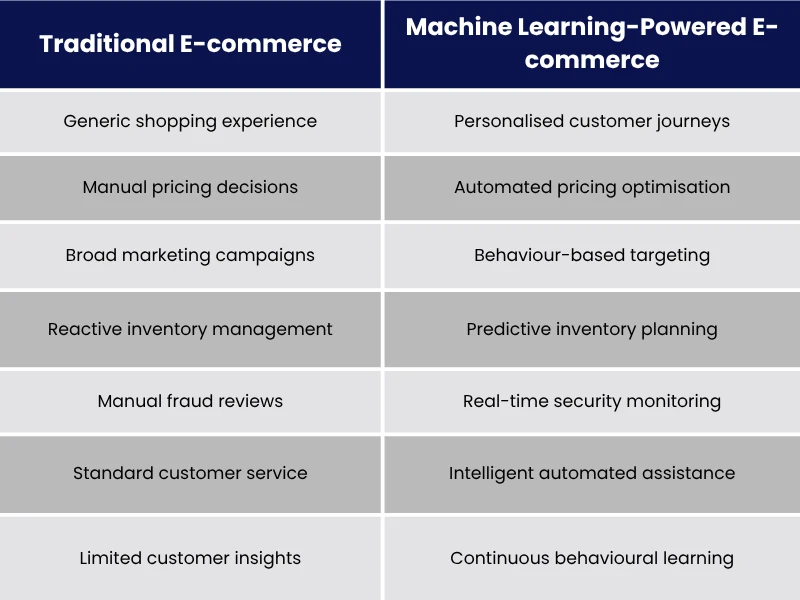
These improvements demonstrate why e-commerce machine learning use cases are becoming essential for retailers seeking sustainable growth.
Real-World Examples of E-commerce Machine Learning
Leading e-commerce brands use machine learning to solve specific business challenges rather than simply automate tasks.
Amazon: Personalised Product Recommendations
Amazon's recommendation engine analyses browsing history, previous purchases, wish lists, and customer behaviour to suggest products that shoppers are most likely to buy. These personalized recommendations appear across product pages, search results, emails, and the homepage, helping increase average order value and repeat purchases.
ASOS: Smarter Product Discovery
Fashion retailer ASOS uses machine learning to improve product search and recommendations. Customers receive suggestions based on their browsing habits, style preferences, and previous purchases, making it easier to discover products that match their interests.
Common Challenges When Implementing Machine Learning
Although the benefits are substantial, successful implementation requires careful planning. Common challenges include:
- Poor-quality or incomplete customer data
- Integrating machine learning with existing e-commerce platforms
- Privacy and regulatory compliance
- Continuous model monitoring and improvement
- Finding skilled technical expertise
Starting with clearly defined business goals often helps organisations overcome these obstacles more effectively.
Best Practices for Successful Machine Learning Adoption
- Start with High-Impact Business Goals: Focus on cases that solve measurable challenges, such as personalised recommendations or inventory optimisation, before expanding further.
- Build a Strong Data Foundation: Ensure customer and operational data is accurate, consistent, and well-organised to improve the performance of machine learning models.
- Continuously Monitor and Improve Models: Regularly evaluate model performance, retrain algorithms, and adapt to changing customer behaviour to maintain accuracy.
- Combine Automation with Human Expertise: Use machine learning to support decision-making while keeping human oversight for strategic decisions and complex scenarios.
- Scale Gradually Across the Business: Begin with a few successful e-commerce machine learning use cases and expand implementation as your team gains experience and confidence.
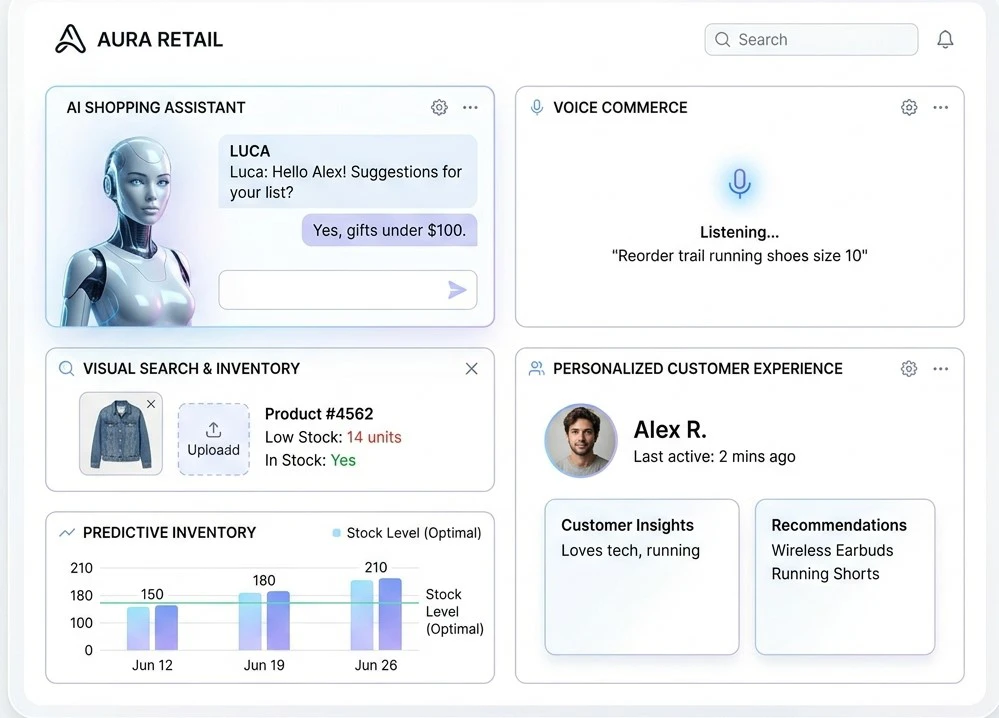
Unlock the Full Potential of E-commerce with Machine Learning
The future of online retail belongs to businesses that can understand customers, anticipate demand, and deliver personalized experiences at scale. e-commerce machine learning use cases enable retailers to move beyond traditional analytics by making smarter decisions in real time.
From intelligent recommendations and pricing optimization to inventory planning, customer retention, and fraud prevention, machine learning helps businesses improve both sales and long-term customer loyalty. As technology becomes more accessible, investing in e-commerce machine learning use cases is no longer a competitive advantage alone. It is quickly becoming a necessity for sustainable e-commerce growth.
Ready to transform your online store with intelligent automation? Our experts can help you identify the most valuable e-commerce machine learning uses for your business, implement scalable AI solutions, and create personalized customer experiences that increase sales, improve retention, and support long-term growth.